
aCGH是如何運作?
陣列比較基因組雜交(aCGH)是一種分子細胞遺傳學方法,能快速掃描基因組中的任何變化。
aCGH檢查患者中功能失常的染色體,並將患者的DNA與作為參考對照的DNA進行比較。
它分析患者的DNA與參考對照DNA之間的差異,並提供獨特且個性化的染色體分析結果。
該過程涉及從血液中分離循環腫瘤細胞(CTCs),提取其DNA,並通過分子檢測和分光光度法分析遺傳特徵。

陣列比較基因組雜交(aCGH)測試,一種基於微陣列的技術,是當今最精確的工具,能檢測出癌症患者中存在的不平衡結構和數量染色體異常。當患者被診斷可能患上未知來源的癌症時,該測試會相當有幫助。在這種情況下,aCGH通過識別與特定類型癌症相關的染色體異常,幫助醫生指引正確方向。
陣列比較基因組雜交(aCGH)是一種分子細胞遺傳學方法,能快速掃描基因組中的任何變化。
aCGH檢查患者中功能失常的染色體,並將患者的DNA與作為參考對照的DNA進行比較。
它分析患者的DNA與參考對照DNA之間的差異,並提供獨特且個性化的染色體分析結果。
該過程涉及從血液中分離循環腫瘤細胞(CTCs),提取其DNA,並通過分子檢測和分光光度法分析遺傳特徵。

aCGH是一種強大的技術,能夠比較來自兩組基因的DNA含量:一個測試(或患者)基因組和一個參考(或對照)基因組。染色體經歷許多異常,如基因中一個或多個片段的增加、缺失或結構變化。aCGH能夠檢測到這些基因中的染色體異常。
這項綜合分析有助於理解導致疾病的潛在遺傳因素。通過識別染色體異常,有助於確定原發腫瘤的潛在位置,為診斷和治療計劃提供關鍵信息。
測試結果為專家提供了對患者基因的清晰理解,並檢測到癌症的主要來源。
它幫助患者更了解利用獨特和個性化的染色體分析發展癌症的風險
它確定了癌症的可能風險和原發腫瘤的潛在位置。

With the detection of abnormalities in the chromosomes, aCGH enables us to identify the type of cancer the patient has been affected with.

It enables precise and fast detection of abnormalities in the entire genome sequence with very high resolution.

It provides clinicians with personalized chromosomal analysis for their unique cancer journey.

Oncotrail has undergone rigorous evaluation to ensure high sensitivity and specificity, making it an invaluable tool for diagnostic purposes.
Through high-precision techniques, the test is used to monitor the effectiveness of a particular cancer treatment. This would objectively provide information on how well the treatment is going.

The non-invasive tracking of the cancer status would notify a treating physician whether to adjust current management or stay the course. This would be important to know in almost real-time rather than to find out much later that a treatment doesn't apply to a particular person.
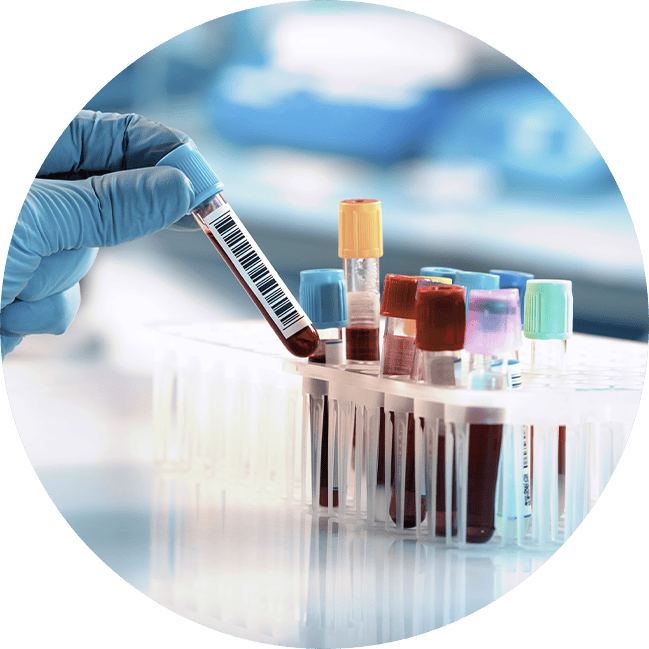
Whole peripheral blood sample

10-15 ml of whole peripheral blood

2-3 weeks in the lab

30 days after sample collection
Applicable for all cancer types
To whom it is relevant: The test is recommended for patients with a confirmed cancer diagnosis.
Yes, the test can be performed for all types of cancer. It helps to identify the chromosomal abnormalities associated with specific types of cancer.
No, liquid biopsy is not painful. It's a simple blood test, similar to having blood drawn for routine lab work. There's no need for surgery or tissue samples, making it a much easier option for cancer detection.
During a liquid biopsy, a small sample of your blood is drawn from a vein in your arm. This blood sample is then analyzed in a lab to look for fragments of cancer DNA or cancer cells in the bloodstream.
Typically, your blood is used as a sample to perform the test. No tissue biopsy is needed.
Results can typically be available within 30 days.
The test can identify chromosomal abnormalities and help locate the primary origin of the tumor.
Chromosomal abnormalities are variations in the structure or number of chromosomes in an individual's cell
©2024 版權所有 不得轉載. Designed by Bee High Media.